When choosing a translation agency, don't just look at the price or a nice website. Find out the business providing the service, the scope of the offer, the delivery date and the correction conditions. A low price, simply using a mobile phone, or owning more than one site is not, by itself, proof of fraud. The following checks help you reduce uncertainties before paying.
1. Compare Price, Duration and Offer Scope
Compare the same services when evaluating a quote. Language, subject of the text, length, delivery date and need for approval affect the fee. Being cheap or expensive alone does not indicate the quality of the translation. Check these three points together:
- Find out what the low price offer includes.
Are all pages, seals and attachments of the original document included in the offer? Will translation control, notary, additional copies and shipping costs be charged separately? Request the total amount you will pay in writing. - Ask about the correction and control process.
Find out who will do quality control. If you notice a terminology or name error, make it clear up front how you will request correction and whether there is a fee for this process. - Get the delivery schedule for high speed request.
The time required varies depending on the subject of the document and workload. If there is an urgent processing fee, ask about its amount and coverage. Do not accept a file ready to be delivered without checking.
Things to consider:
- If your work is urgent, state the date and time clearly. If notary, apostille tracking or shipping is required, ask if these are planned separately from the translation time.
- Compare market offers with the same language, documentation and delivery condition. If one offer includes a notary or courier and the other does not, looking only at the final amount can be misleading.
- A professional quote explains what you will pay for a certified translation and any additional processing. Find out in writing whether the price includes tax, inspection, notary and delivery costs.
2. Seek Contact Information and Corporate Transparency
Ask for verifiable business information. Using only a mobile number or providing online service alone is not a problem. The main thing is that it is clear which business provides the service and who to contact if there is a problem.
Things to consider:
- Check company name, billing information and contact address for a safe start. If the payment recipient's relationship with the business in the offer is unclear, ask for clarification before paying.
- Confirm the authenticity of the offer by phone or email on the website. Instead of trusting a link in a suspicious message, use the official communication channel you know.
- Find out who you'll be meeting with throughout the project and what times you'll be able to hear back. Keep correspondence and agreed terms of delivery.
3. Verify the Business Providing the Service on Multiple Sites
A business may use multiple websites for different languages or services. This alone is not cheating. However, it should be clear whether the different offers come from the same business. Compare the trade name, contact information and invoicing company across the sites.
Things to consider:
- The Whois record may provide technical information about the domain name, but personal information may be closed for privacy reasons. The failure of the registrant to appear is not evidence of fraud. Don't evaluate a business based solely on its Whois result.
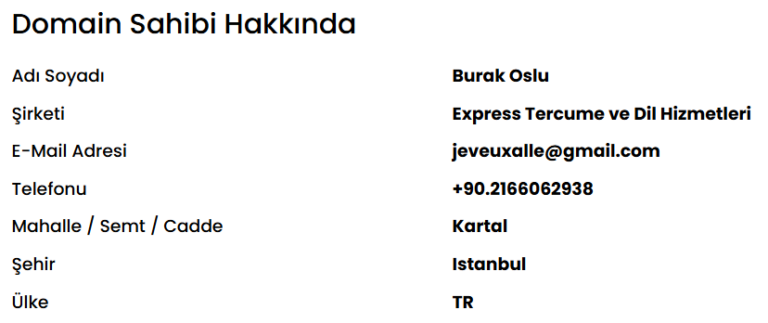
- If there is the same phone number or address on different sites, ask if they belong to the same business. When comparing prices, do not assume that you are receiving quotes from two independent companies.
- Check the spelling of the corporate email address and domain name. Beware of addresses with one letter changed. The use of free email alone is not an indication of fraud; The important thing is to verify the relationship of the offer with the real business.
- Check the amount and payment recipient on the payment screen on the website. Having a card payment option alone does not guarantee service quality or trouble-free delivery. Read the order conditions separately.
4. Research Real Customer Reviews
Do not use customer reviews alone as a decision criterion. Look at when the review was written, what service it describes, and how the business responded to an issue. The absence of any negative comments alone is not evidence of fraud.
Things to consider:
- Read the content of the comments as well as the high score. Experience with documents, languages and delivery times similar to your needs may be more helpful.
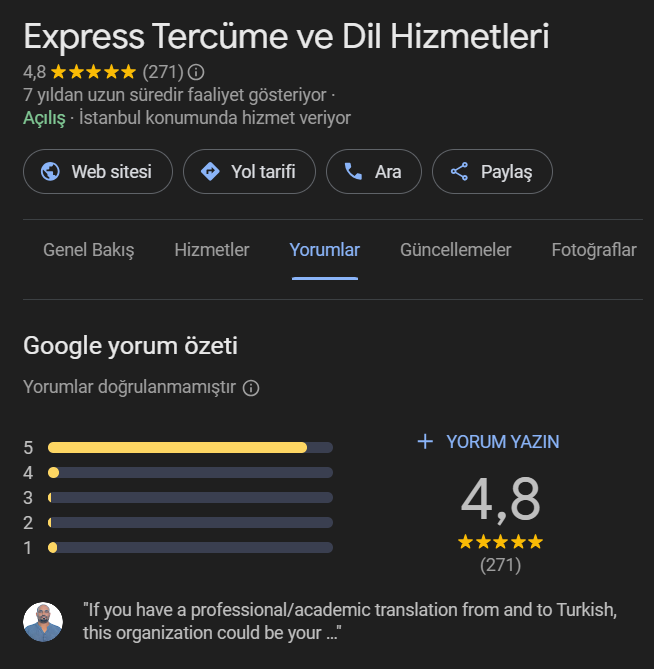
- Don't just look at the number of stars. Evaluate identical texts, comments accumulated in a very short time, and consistency in different sources together. These alone do not give a definitive judgment.
5. Request Clarification on Legal Matters
Explain in which institution your document will be used. Ask the office why it considers the sworn translation, notarization or apostille necessary. For the final decision, take the current document requirement of the receiving institution as basis.
Things to consider:
- Specify the country, institution and application type where the translation will be used. Share the institution's list of documents with the office; Clarify the scope of the transaction to avoid missing or extra approvals.
6. Verify Payment Recipient and Written Order Terms
Partial or full prepayment may be requested. Before paying, receive the total amount, delivery date, cancellation and correction conditions in writing. Keep quote, payment record and invoice.
Things to consider:
- If you have problems, especially with card payment, first contact the business in writing. You can learn about the transaction objection process from your bank; The application does not provide automatic refunds in all cases.
- If you are using wire transfer, EFT or SWIFT, confirm the recipient information. Write the order number and service name in the description; Keep the receipt.
- If you are going to pay in cash, ask for proof of payment stating the amount and service. Share billing information in advance; Do not make payments without documentation.
7. Ask for Correction and Liability Terms
It should be clear how to recourse if you discover an error after the job is submitted. Instead of saying “there will be no problems,” find out the scope, duration and cost of the fix, if any.
Things to consider:
- In your translation proposal, ask for the control process and the files to be delivered in writing. Ask how to check critical names, dates and technical terms.
- Learn how to submit a post-translation correction request and how long it takes to respond.
- Ask how the office error is distinguished from the customer demand that changed later. Read the terms of liability and compensation, if any, in writing; Ask for clarification for ambiguous items.
8. Examine Content on Websites Related to Their Areas of Expertise
Do not rely solely on a long article or assertive words when it comes to trust. See if the site clearly explains the process for your document type. Content may be useful, but it alone is not proof of service quality.
Things to consider:
- Specify the subject of your document to the translation agency. Ask about his experience with similar texts and how he checks terminology.
- In law, medical and technical texts, knowledge of the relevant field is important. Learn how to choose a translator and control process appropriate to the topic.
- If an official transaction is described in the articles, check its source and currentness. If the institution name, document requirement or date cannot be verified, consult the relevant authority before taking action.
9. Consider Approach to Urgent Business Requests
When requesting an urgent translation, don't just say "today"; Specify the date and time. Send all pages of the document. Find out whether separate time is required for translation, control, notary and shipping.
Things to consider:
- See the required delivery time on the quote. Clarify whether the submission is a digital file or a hard copy.
- Discuss the possibility of not receiving the entire document in case of urgent work. Ask who will notify you if there is a delay and what options will be available.
- If there is an urgent processing fee, ask for it to be included in the total price. Find out if additional pages sent later will change the delivery time.
To summarize in general, when choosing a translation agency;
✅ Find out in writing which services the price covers.
✅ Verify the business providing the service and the payment recipient.
✅ Evaluate the content and currency of the comments together.
✅ Learn the type of translation and approval required by the institution.
✅ Save the quote, payment record and invoice.
✅ Ask about the translator and control process appropriate to the document type.
✅ Clarify delivery date, file format and correction conditions.
Remember: the most useful information when choosing a translation agency is that the service to be offered to you is written and understandable. Express TranslateWhen receiving an offer from , sharing your document, language, institution requirements and delivery date will clarify the process.