



Documents We Translate
These are examples of records we translate, not a compulsory checklist for every applicant. The receiving authority determines which documents and languages are required.
Service and employment evidence
Organizations, duties and dates are translated without combining different types of service.

Religious or institutional records
Membership, appointments and qualifications retain the original titles and scope.
Civil and legal documents
We preserve personal details, official decisions and all readable annotations.
Details That Matter in Your Translation
EB-4 is a group of categories
The evidence for one special-immigrant category is not a checklist for every other category. Share the specific classification and requested records.
Program rules can be time-sensitive
Some statutory programs have dates or availability limits. We do not promise that a category is currently open or that an applicant qualifies.
Translation Examples
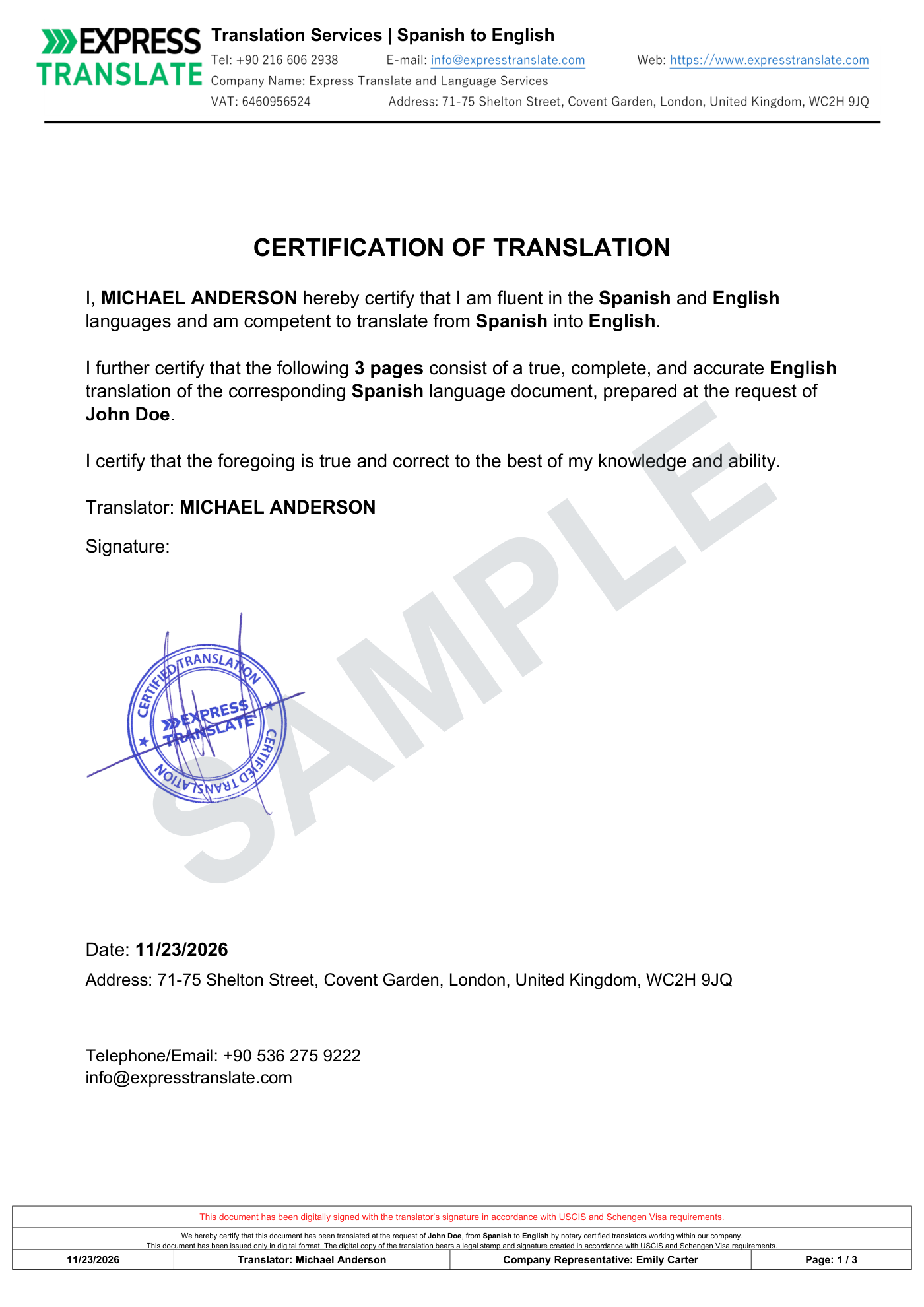
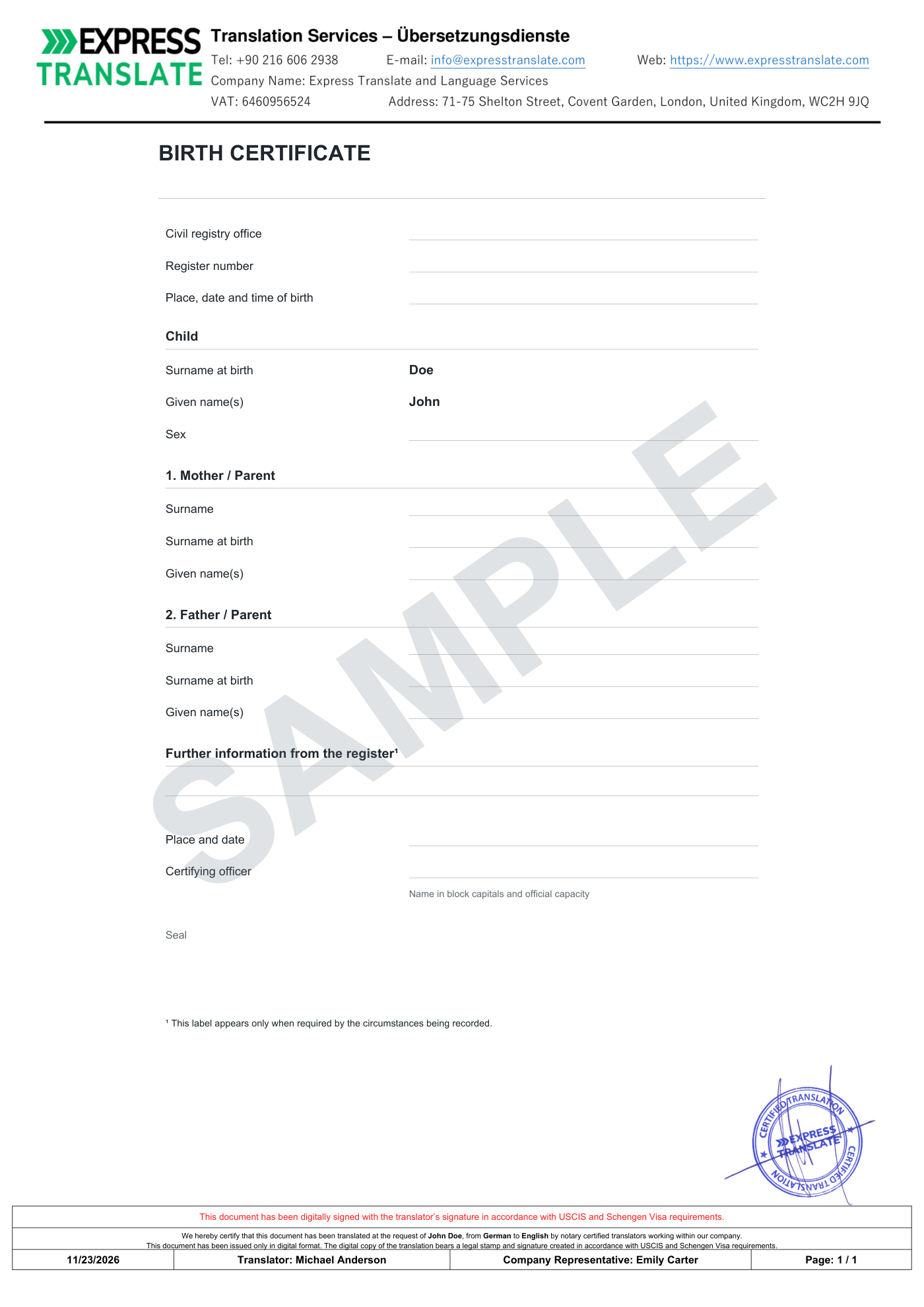
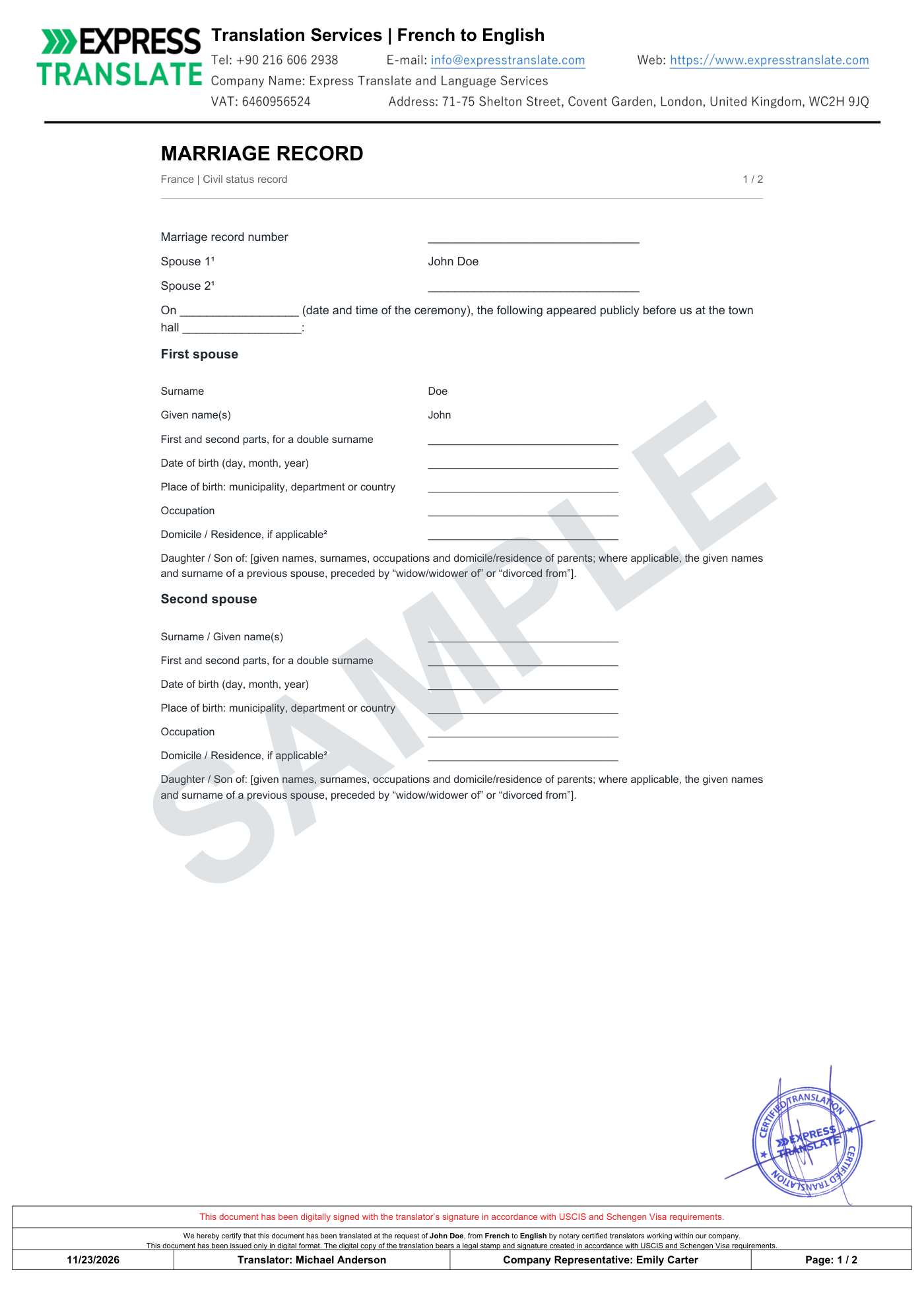
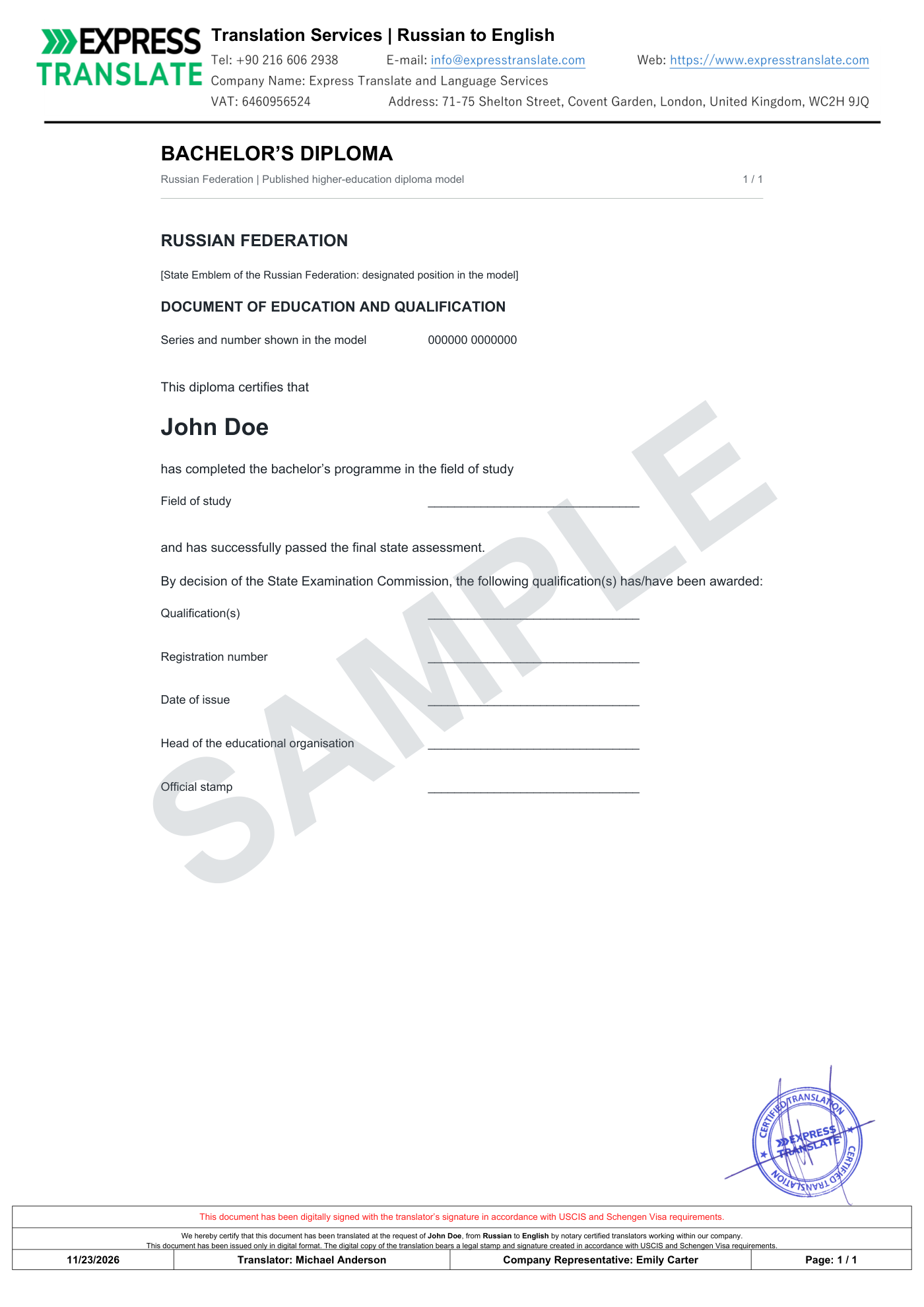
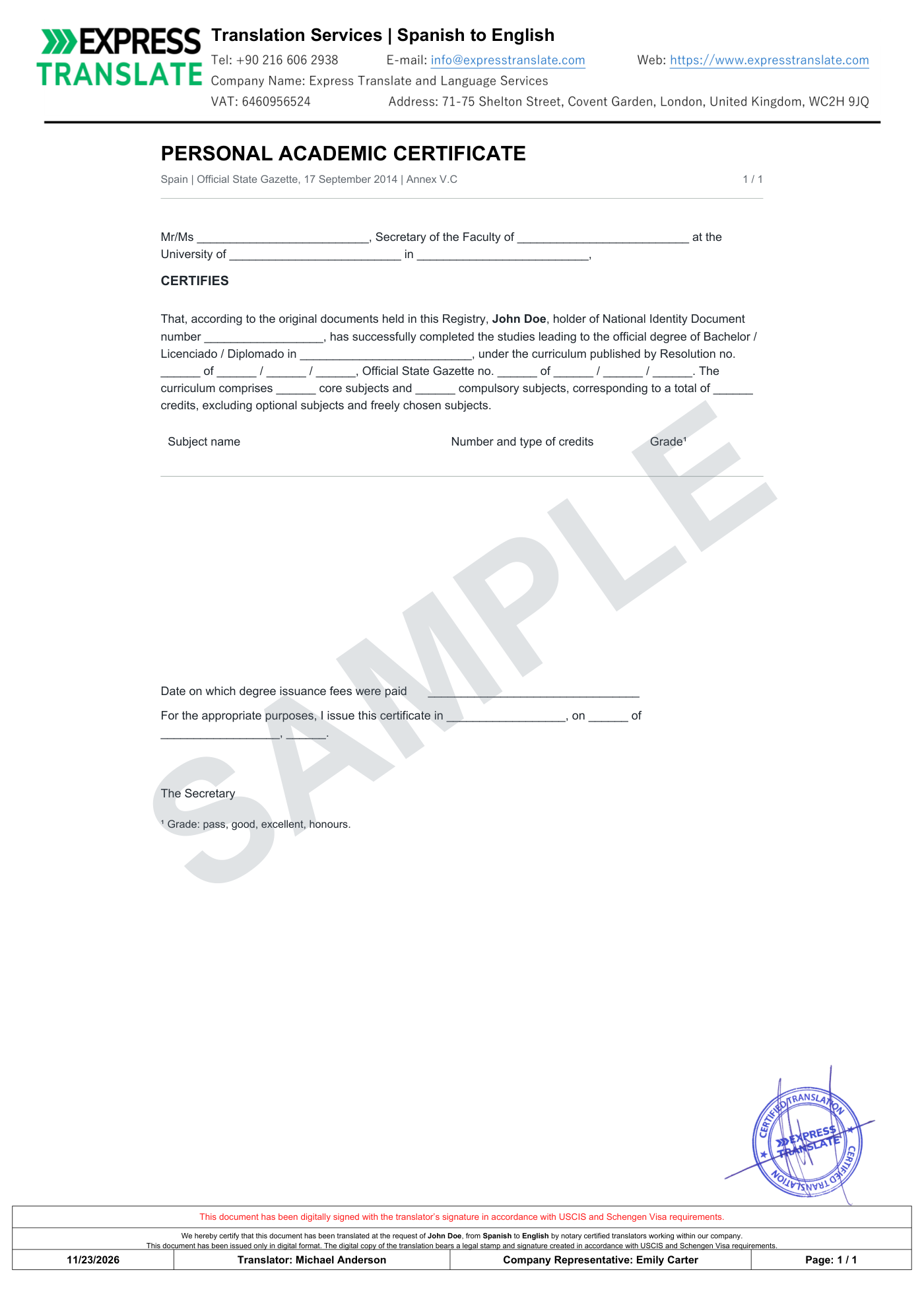
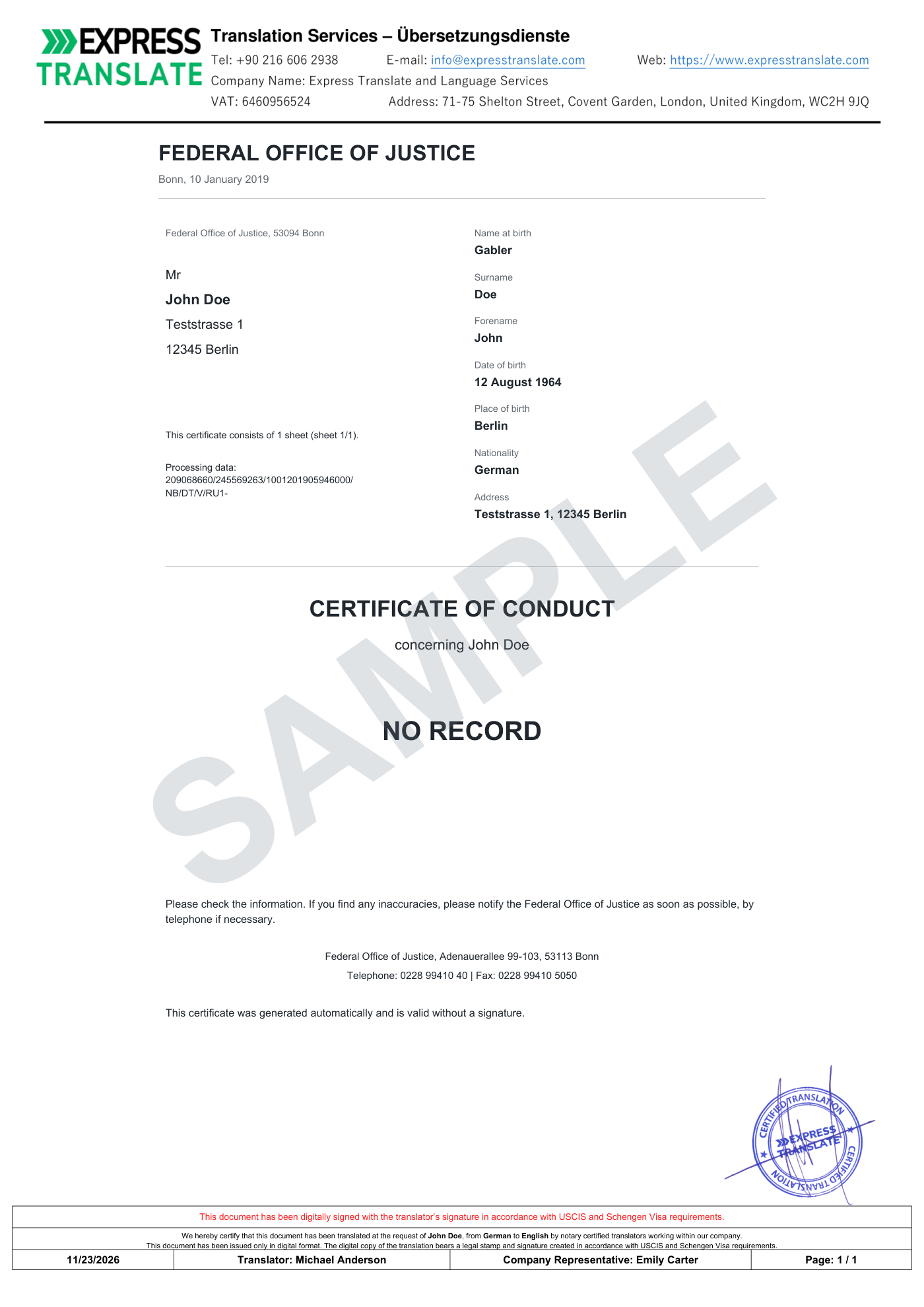
View examples of our certified translations and translation certificates.
Related Visa Classifications
- EB-4
- SD
- SR
These codes belong to the category or related applications covered in this guide. A shared guide does not mean that every code has the same eligibility rules.
Support for Your EB-4 Special Immigrant Documents Document Translation
Your translation is reviewed before delivery. The agreed certification and delivery options are confirmed with your order.

Revisions are free and unlimited. If an issue cannot be resolved, we provide a refund. Contact us about any issue with your translation or the certification included in your order.
Revisions are free and unlimited. Contact us or use your customer panel to request a correction.
If an issue with your translation cannot be resolved, we provide a refund.
Our revision and refund policy concerns our translation service. It does not guarantee a decision by the receiving institution.
Prepare Your Documents for Translation
Complete, readable copies
Upload all relevant pages, including reverse-side text, stamps, seals and handwritten notes. PDF, clear photographs and supported document files can be used.

Names and references
Provide the passport or identity spelling if a name differs between records. We ask for clarification and do not invent missing names or dates.
Your receiving authority
Tell us whether the documents are for USCIS, a U.S. consulate, a university or another recipient. Include any written translation instructions.
A complete translation
We retain readable names, dates, figures, stamps and annotations. Unreadable passages are marked as illegible and discussed with you.
USCIS and Consular Translation Requirements
For a document submitted to USCIS in a foreign language, the applicable rule requires a full English translation and the translator’s certification of completeness, accuracy and competence to translate into English. USCIS is an agency, not a single visa category.
Consular instructions can differ from USCIS requirements. The National Visa Center generally requires certified translations for documents that are neither in English nor in the official language of the country where the visa application is made. Embassy-specific instructions can add requirements.
Notarization and apostille are different from translation certification. They are not automatic requirements for every U.S. application; any additional service should follow the receiving authority’s instructions.
Worldwide Visa Translation Services
From study and work to joining your family abroad, we translate the documents for your next move. Online service in every country and language.
- Study Permit
- Express Entry
- Visitor Visa
- Student Visa
- Family Visa
- Skilled Worker Visa
- Opportunity Card
- EU Blue Card
- Student Visa
- Skilled Worker Visa
- Qualification Recognition
- Student Visa
- Long-Stay Visitor Visa
- Student Visa
- Digital Nomad Visa
- Non-Lucrative Visa
- Student Visa
- Digital Nomad Visa
- Elective Residence Visa
- D7 Visa
- Digital Nomad Visa
- Visa applications
- Residence applications
- Student Visa
- Skilled Migration

Document Translation for U.S. Visas

Visiting, studying, working or joining family in the United States? Explore the document translation service for your visa category, from supporting records to signed certification.
Find Your U.S. Visa Category
Green Card and permanent residence
Visits and business travel
Study and exchange
Temporary work
- H-1B Work Visa
- H-2A Agricultural Worker Visa
- H-2B Temporary Worker Visa
- L-1 Intracompany Transfer Visa
- O-1 Extraordinary Ability Visa
- E-3 Specialty Occupation Visa
- TN Professional Visa
- H-1B1 Professional Visa
- H-3 Trainee Visa
- P Visa for Athletes and Performers
- Q-1 Cultural Exchange Visa
- R-1 Religious Worker Visa
- I Media and Journalist Visa
Trade and investment
Family and adoption
Employment-based immigration
Transit and crew
Official and international service
Northern Mariana Islands
Protection and special cases
Other Visa Types We Support
Choose your destination to explore our visa and residence document translation services.
 Schengen Area Visa Translation
 United Kingdom Visa Translation
 Canada Visa Translation
 Australia Visa Translation
 Germany Visa Translation
 Spain Visa Translation
 France Visa Translation
 Italy Visa Translation
 Portugal Visa Translation
English Translation
- Document Translation
- Certification Options
- Specialist Terminology
- Reviewed Before Delivery
German Translation
- Document Translation
- Certification Options
- Specialist Terminology
- Reviewed Before Delivery
French Translation
- Document Translation
- Certification Options
- Specialist Terminology
- Reviewed Before Delivery
Spanish Translation
- Document Translation
- Certification Options
- Specialist Terminology
- Reviewed Before Delivery

Arabic Translation
- Document Translation
- Certification Options
- Specialist Terminology
- Reviewed Before Delivery

Russian Translation
- Document Translation
- Certification Options
- Specialist Terminology
- Reviewed Before Delivery











Official Sources
- U.S. Department of State: employment-based immigrant visas
- Foreign Affairs Manual: immigrant classifications
- 8 CFR 103.2: translations submitted to USCIS
- National Visa Center: civil documents
Sources reviewed:
Express Translate provides document translation and certification. We do not issue visas, determine immigration eligibility or guarantee approval. Translation delivery estimates concern your order, not government processing times.